Ideal Customer Profile
Her pain
The scale
~1 hr
to sketch a flow she could explain verbally in 10 min: the vocabulary gap
Balsamiq User Research
1.4M+
Balsamiq users globally, the majority non-designers like Alex
Balsamiq Internal
Market context: nearly 80% of product managers actively participate in design activities (McKinsey, The Product Management Talent Dilemma) · 65% of senior managers say meetings keep them from completing their own work (HBR, “Stop the Meeting Madness,” 2017, survey of 182 senior managers)

01
Research with real non-designer users
Research to interview users, observe their workflows and learn about their use and expectations with generative AI. Demonstrated concept videos to gauge interest and get feedback.
02
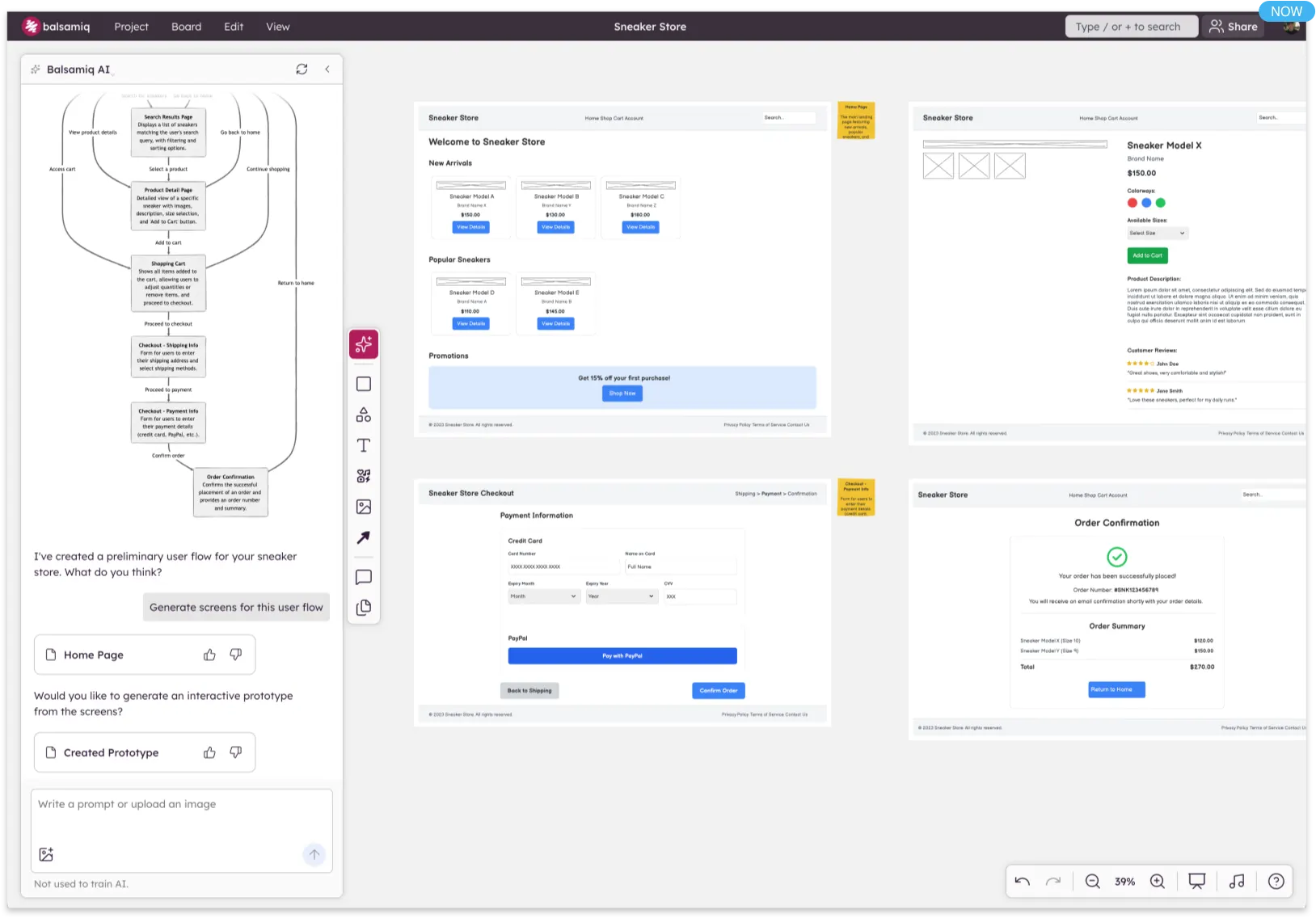
Prototyped the AI interaction layer
Explored natural language input, smart suggestions, and component generation. Tested multiple models of how AI enters the existing Balsamiq workflow without disrupting it.
03
Preserved the Balsamiq ethos
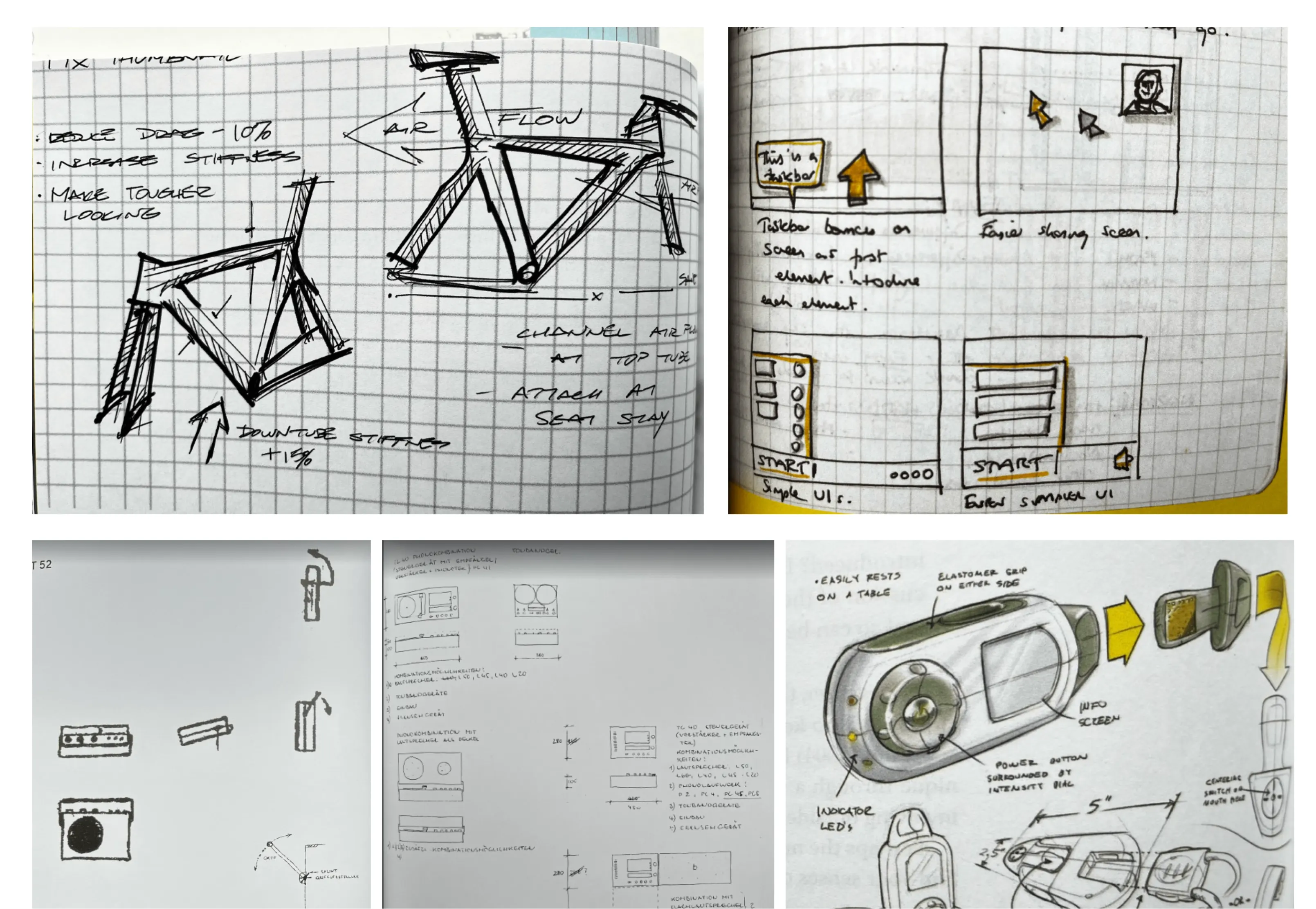
The hardest constraint: keeping the tool fast, low-fi, and non-precious while adding a powerful new capability layer. Empowering users without taking away the core experience that helps get them in "flow" was the design problem.
1 / 2
01
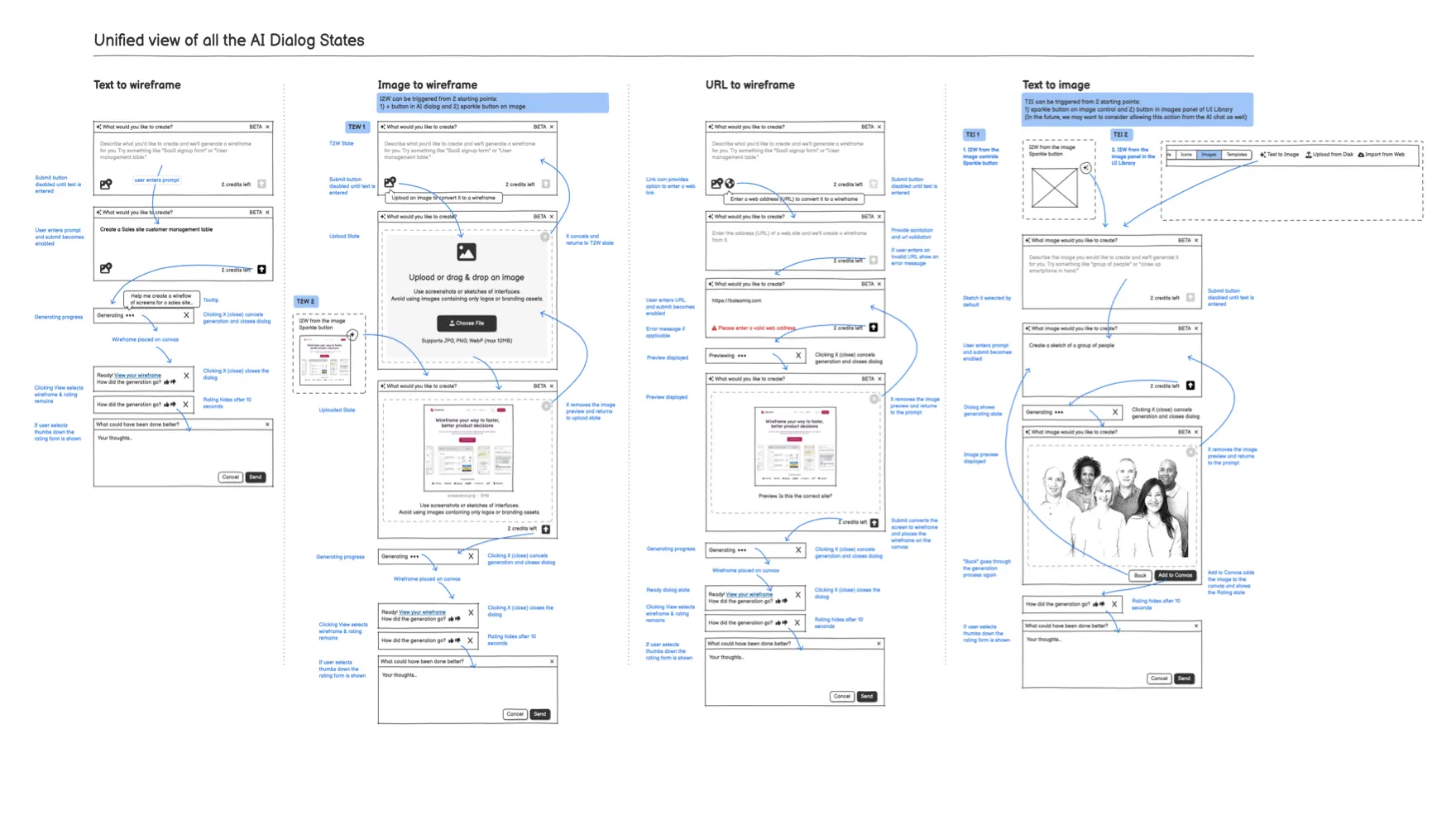
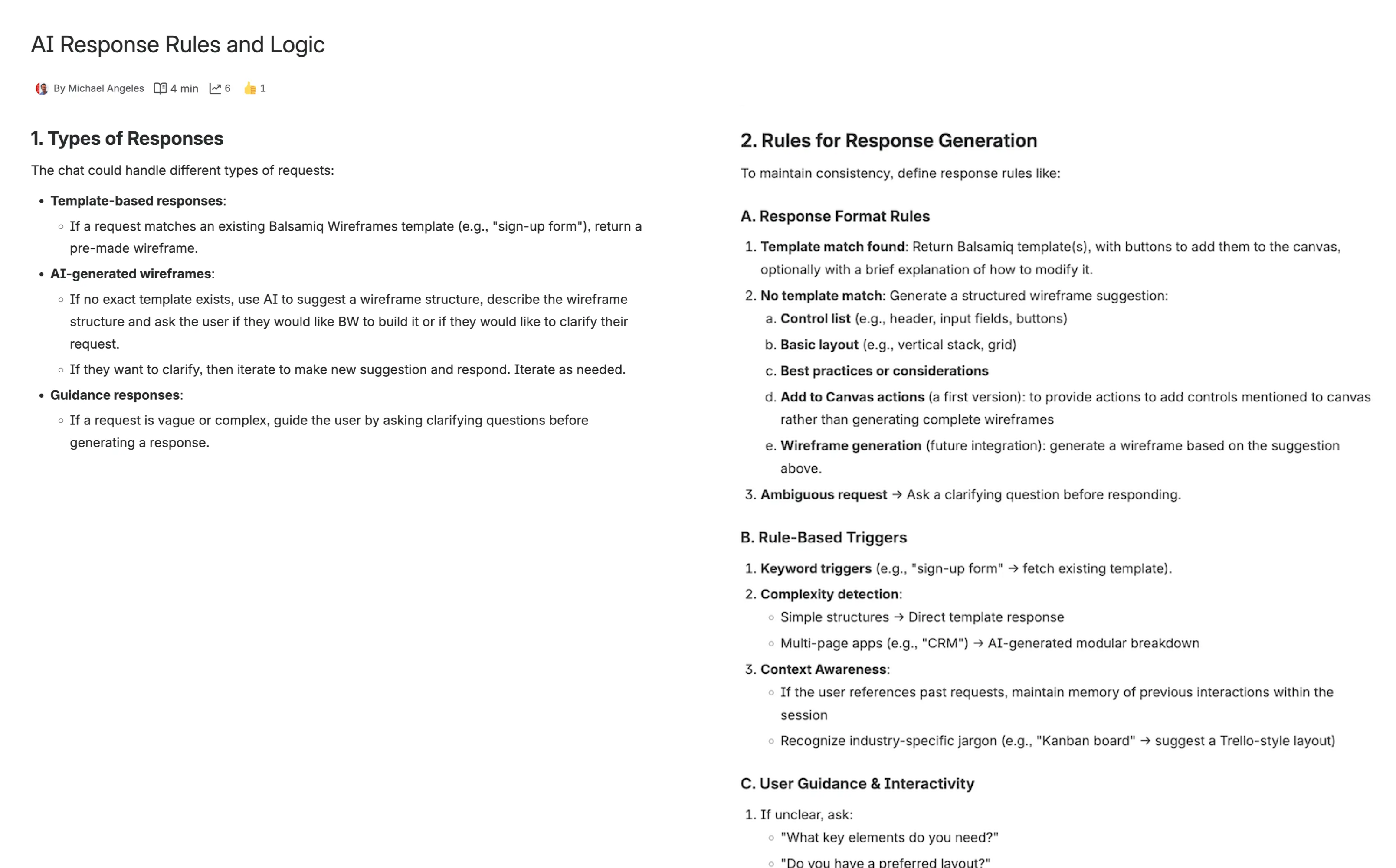
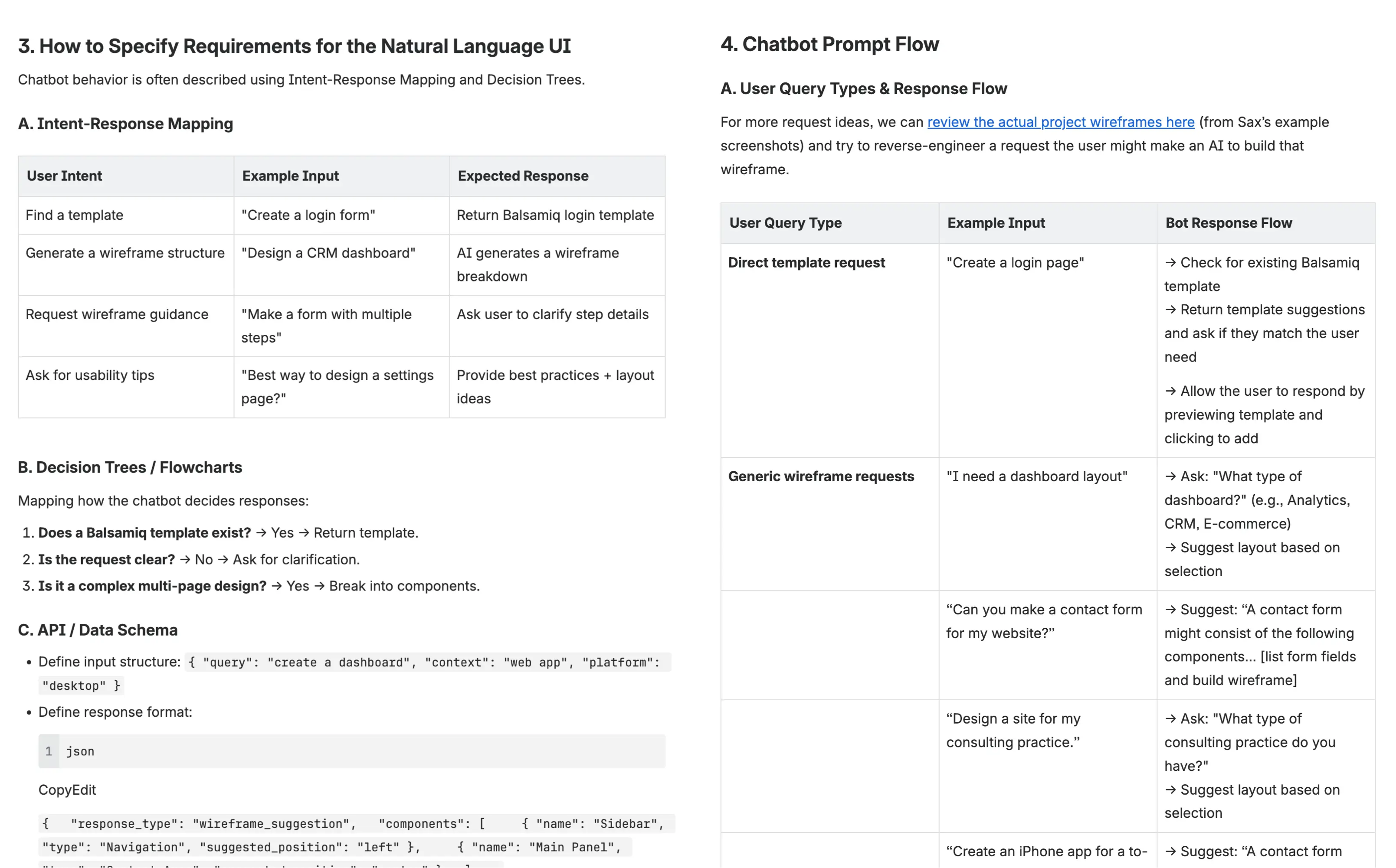
Writing the system instructions
Collaborated closely with engineering to author the system prompt, rules, and guardrails that governed AI behavior. Translated design intent into the constraints the model needed to produce useful, predictable output.
02
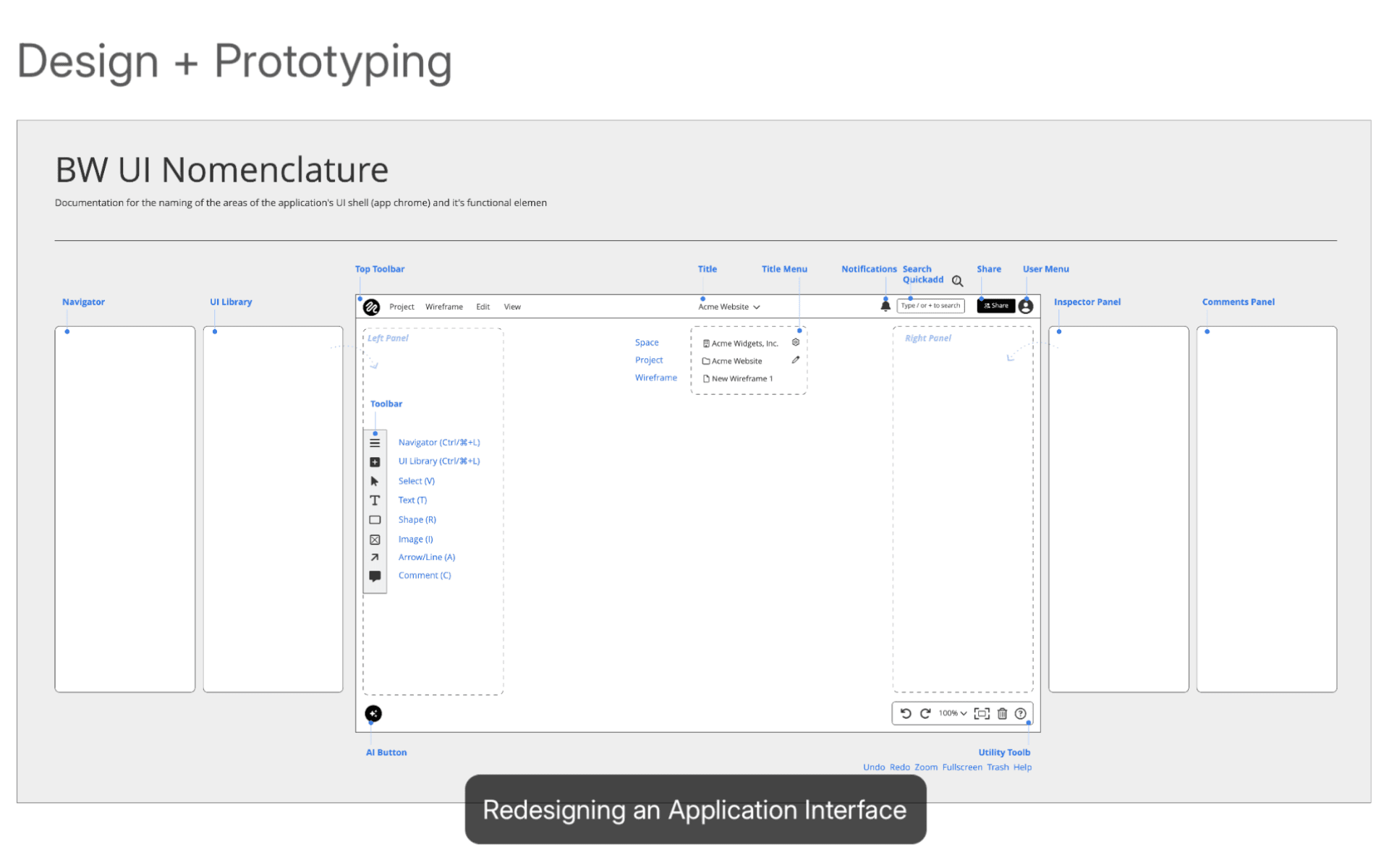
Teaching the model to lay out screens
Contributed domain knowledge about how LLMs construct HTML to improve the generative layout feature. Bridged the gap between how designers think about visual composition and how a language model actually builds structure.
03
Specifying and reviewing evals
Helped define what "good output" looked like by contributing to the evaluation framework, reviewing generated wireframes against those criteria, and feeding findings back into the model's instructions to improve quality over time.
1 / 2
01
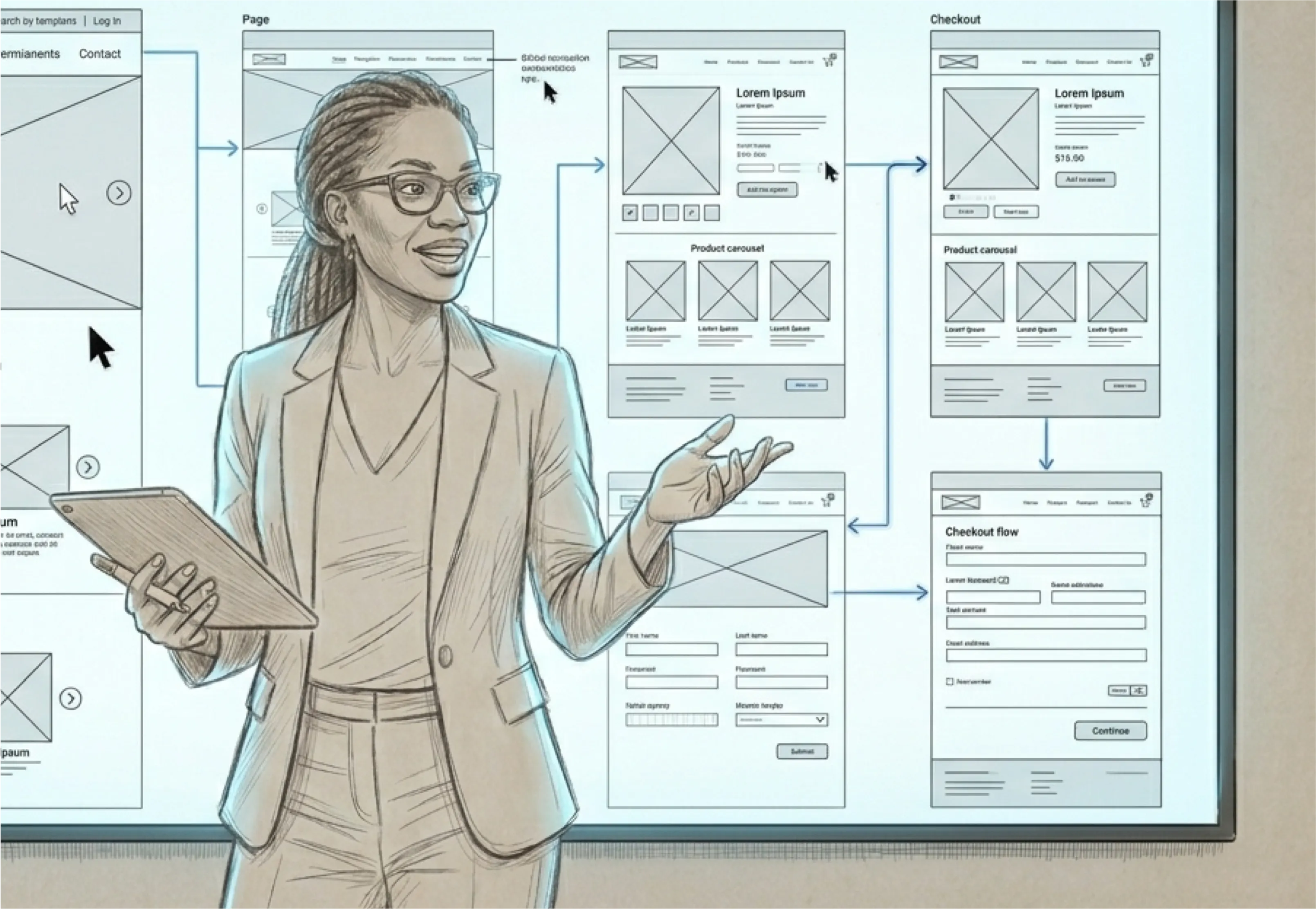
From idea to canvas
She typed what she was thinking. The tool met her there.
02
Faster than drag-and-drop
What used to take an hour took minutes.
03
Design superpowers
She showed up with a real artifact instead of a napkin sketch or a bulleted list.
Intent as constraints, not wishes
At Balsamiq I learned to turn design intent like “keep it low-fi and non-precious” into rules a model can actually follow and be tested against. It’s the discipline every AI product needs, and I’ve done it in production.
Trustworthy AI at scale
Led the AI feature on a tool 1.4M people relied on. I made generated output reliable enough for non-experts to trust, and kept the product feeling like itself while it scaled.
Build, not just spec
I ship real prototypes in code using Claude Code, the same agentic workflow your team runs on. That removes the usual friction between design and engineering before it starts.
AI as a first draft
I design AI output as a first draft people shape, never a final answer they accept. That’s the trust problem every AI product has to solve: people only act on output they trust.
1 / 8